

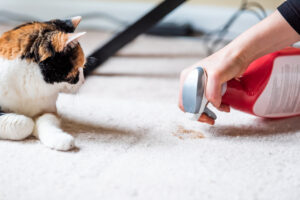
Pet odors may remain in a rental property once tenants with pets leave. Attracting new tenants can be difficult when these odors are present, particularly tenants who are sensitive to smells or who don’t have pets. A long tenancy or a significant pet-related mess can make removing pet odors especially challenging. These general tips will help you restore your rental property and remove pet odors effectively.
The Quick Science Behind Pet Odors
Allowing pets in a rental property commonly leads to problems with pet odors. Bacteria present in pet urine or feces break down the volatile organic compounds (VOCs) responsible for these odors. Regular cleaning of carpets, upholstery, and hard surfaces helps manage these odors. Enzymatic cleaners excel at dismantling the substances that cause odors. Persistent odors are easier to prevent when you set clear expectations for tenants and clean regularly.
Methods for Removing Pet Odors from Your Rental Property
Cleaning products used on carpets, upholstery, and hard surfaces should be safe for people and pets. Regular cleaning and maintenance are essential to prevent pet odors from becoming a persistent issue.
- Enzymatic cleaners are effective against pet odors because enzymes break down the bacteria that cause them. Use them on hard surfaces, upholstery, and carpets; they can also help remove stains left by pet urine or feces. The price may be higher than that of some other products, but the effectiveness often makes enzymatic cleaners a worthwhile investment.
- Baking soda and vinegar, both common household products, can help eliminate pet odors. Baking soda absorbs odors naturally: sprinkle it over carpets and upholstery, leave it for several hours, then vacuum it up. On hard surfaces, a water-and-vinegar spray works as a natural disinfectant and helps neutralize odors.
- Activated charcoal soaks up odors naturally, which makes it handy against persistent smells. Dot bowls of it around the property, and mind where you put them so cleanup stays free of spills and messes.
- Filtering out allergens and pet dander allows air purifiers to remove pet odors effectively. Keep in mind that they require regular maintenance and can represent a higher initial investment.
Keeping Your Rental Property Odor-Free
If you want rental properties to stay odor-free, work to prevent pet odors from developing in the first place. Routine cleaning and maintenance can prevent pet odors from becoming a problem. Consider these steps to head off pet odors in the future:
- Establish clear guidelines for pet tenants. Make sure tenants understand that they are responsible for keeping the property clean and odor-free. Encourage the use of odor-control products and regular cleanup after pets, indoors and outdoors alike.
- Consistent cleaning and maintenance: Staying on top of cleaning and maintenance keeps pet odors from becoming an issue. Prevent odor buildup by regularly cleaning hard surfaces, carpets, and upholstery, and rely on cleaning supplies that are safe for people and pets.
- Air purifiers: Putting purifiers in common areas, or throughout the rental property, can lower pet odors and capture allergens such as pet dander.
- Limit the number and size of pets: Your rental properties face a lower risk of odors and property damage when you set reasonable limits on the number and size of pets allowed.
The health of tenants and the appeal of a rental property can both suffer because of pet odors. Air purifiers, baking soda, vinegar, enzymatic cleaners, and activated charcoal are all effective odor removal strategies that property owners and managers should use. Telling pet tenants what is expected, cleaning on a regular schedule, and keeping pet restrictions reasonable are preventative measures that help rental properties stay fresh and attractive to all tenants.
If you need additional support with property management or maintaining rental properties, contact our team at Real Property Management Crossroads today.
Originally Published on February 9, 2024
This content is provided for general informational and educational purposes only and does not constitute financial, legal, tax, or investment advice. Readers should consult with licensed professionals regarding their specific circumstances.
We are pledged to the letter and spirit of U.S. policy for the achievement of equal housing opportunity throughout the Nation. See Equal Housing Opportunity Statement for more information.
